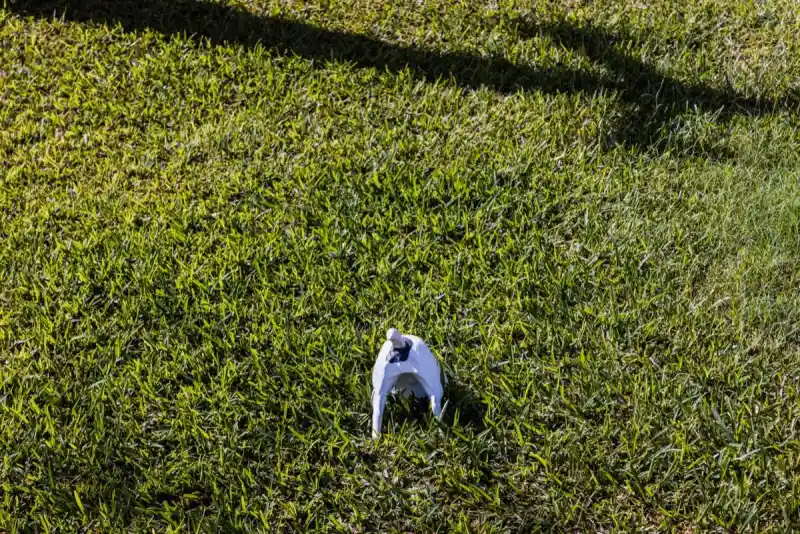
Zoysia is the most low-maintenance warm-season lawn you can buy, and the worst one to damage. It grows into a dense carpet that crowds out weeds, needs less mowing and less fertilizer than Bermuda, and takes an entire season to heal a bare patch the size of a dinner plate.
That trade — beautiful and self-sufficient versus slow to recover — is the whole decision. Everything below is detail on it.
The honest ledger
Pros
- Densest turf of the common warm-season grasses; weeds struggle to establish
- Tolerates more shade than Bermuda, roughly five to six hours of sun
- Needs less nitrogen than Bermuda or St. Augustine
- Slower vertical growth means fewer mows per season
- Better cold tolerance than St. Augustine
- Excellent traffic tolerance while it is intact
- Deep-rooted and reasonably drought tolerant once established
Cons
- Costs 20 to 40 percent more than Bermuda per square foot
- Recovers from damage very slowly — a season or more for a bare patch
- Builds thatch faster than other warm-season grasses
- Greens up two to three weeks later in spring than Bermuda
- Dense enough that a dull mower blade tears rather than cuts
- Limited variety availability from local farms
Where zoysia beats the alternatives
Weed suppression. This is its best trick. A healthy, mature zoysia lawn is so dense that weed seeds cannot find soil and light. People who plant zoysia typically spend far less on herbicide than their Bermuda neighbors, and the lawn keeps looking clean with much less intervention.
Mowing. It grows slowly upward. Every seven to ten days at 1.5 to 2.5 inches during peak season, versus every five to seven for Bermuda cut short. Over a season that is a meaningful number of Saturdays.
Fertilizer. It runs well on considerably less nitrogen than Bermuda wants. Overfeeding zoysia does not make it lush, it makes thatch.
The feel. Fine-bladed zoysia is genuinely nice to walk on barefoot — dense and springy in a way that Bermuda cut short is not.
Where it will disappoint you
Recovery. This is the one to take seriously. Zoysia spreads by both stolons and rhizomes but does so slowly, and a bare area from a dog run, a moved trampoline, a fence-post repair, or grub damage does not close in a few weeks. It closes over months, or over a season, or you plug it.
If your yard has a heavy-use area — a gate, a goal mouth, the path from the back door to the garage — zoysia will show that path and keep showing it.
Thatch. The density that keeps weeds out also builds a spongy organic layer between the grass and the soil. Once that layer gets past about half an inch, water sits in it instead of reaching the roots, and the lawn becomes strangely hard to water properly. Core aeration or dethatching every two to three years handles it. Ignoring it does not.
Spring green-up. It is the last of the warm-season grasses to wake up. If your neighbor's Bermuda is green and yours is still straw-colored, that is normal and it is also mildly irritating every single year.
Mower demands. Dense turf plus a dull blade equals shredded tips that turn tan a day later. A sharp blade matters more with zoysia than with anything else, and some varieties look better cut with a reel mower.
Varieties worth knowing
Farms carry different types, and the differences are not cosmetic.
- Zeon — fine bladed, good shade tolerance, popular for residential lawns
- Emerald — very fine texture, excellent looking, more particular about conditions
- Palisades, JaMur, Empire — coarser Japonica types, faster establishment, more heat and drought tolerance, generally cheaper
- Meyer — the cold-hardy standard on the northern edge of the range
Ask which one you are getting. A quote that just says "zoysia" is describing a genus, not a product.
Zoysia vs Bermuda, head to head
| Zoysia | Bermuda | |
|---|---|---|
| Sun needed | 5–6 hours | 7–8 hours |
| Cost per sq ft | Higher, 20–40% | Lower |
| Mow frequency | Every 7–10 days | Every 5–7 days |
| Nitrogen needs | Lower | Higher |
| Recovery from damage | Slow, a season | Fast, weeks |
| Weed resistance | Excellent | Good when dense |
| Thatch tendency | Higher | Moderate |
| Spring green-up | Later | Earlier |
Who should actually buy zoysia
Buy it if your yard is moderate-use, you have some shade, you would rather mow less and fertilize less, and you are willing to aerate every couple of years. It is the closest thing to a lawn that maintains itself.
Do not buy it if you have dogs that run a fixed route, kids playing organized sport on the grass, or any area that takes a hammering. You will spend the difference in price on plugs and patience. Bermuda is the right answer there and it is cheaper — see our Bermuda comparison for how it stacks up against the other options.
Do not buy it for deep shade either. Five to six hours is real. Under four hours you want St. Augustine, or you want to stop trying to grow grass there and put in a bed. We say that on site visits more often than you would think, and it saves people a thousand dollars.
What makes it work
Zoysia rewards preparation more than most grasses because it is slow to fix any mistake you make underneath it. Get the grade right, break the compaction layer four to six inches down, work in compost, and let the sod knit before you use the yard. Our yard preparation guide covers the sequence.
Then water it properly for the first month — the new sod watering schedule is the same for zoysia as anything else — and then largely leave it alone. Leaving it alone is what it is good at.
Elk Grove Elite Sod & Turf puts zoysia down in Elk Grove and the Sacramento Valley — plus Bermuda where the yard argues for it — over soil prep and grading done first, since that is what decides how a slow-repairing grass holds up. We will tell you honestly if your yard's traffic pattern makes zoysia the wrong purchase.
Get a free quote → · call (877) 679-5932
Ready for a free quote in Elk Grove?
Elk Grove Elite Sod & Turf — free estimate, clear scope, no pressure. Use the form on this page or jump to the homepage quote.
Related services in Elk Grove
Elk Grove Elite Sod & Turf money pages — go straight to the service you need.
- Bermuda Sod →
Bermuda sod is the water-budget answer for a full-sun Elk Grove yard, using substantially less irrigation than tall fescue once established and repairing its own wear as it spreads. We install TifTuf and Tifway 419, and the honest catch is winter color: Bermuda goes dormant and straw brown from roughly November to April here, and you need to be at peace with that before you buy it.
- Zoysia Sod →
Zoysia sod is what Elk Grove homeowners buy after a few summers of feeding, mowing and watering a fescue lawn and deciding there has to be a better arrangement. It grows slowly, so you mow less, and it grows densely, so it crowds out most weeds without a chemical program propping it up.
- Topsoil & Soil Amendment →
Topsoil and soil amendment is what you are really buying when you buy a lawn, because the top six inches decide almost everything that happens afterwards. Elk Grove sits largely on San Joaquin series soil, California's official state soil, and its defining feature is a cemented hardpan somewhere between roughly eight inches and three feet down that roots will not cross and water will not drain through.
- Tall Fescue Sod →
Tall fescue sod is the Sacramento Valley default and the grass most Elk Grove homeowners actually want, because it holds color twelve months a year instead of going straw brown from November to April. We install turf-type tall fescue and dwarf fescue blends across Elk Grove, and we will tell you upfront what that year-round green costs you at the meter.
- UC Verde Buffalograss Sod →
UC Verde buffalograss is the lowest-water real lawn we install in Elk Grove, and on the right property it cuts irrigation dramatically against a fescue lawn while still being grass you can walk on barefoot. It was bred by the University of California specifically for California conditions, which is exactly why it behaves so differently from the buffalograss cultivars sold in Texas and Colorado.
Frequently asked questions
Is zoysia better than Bermuda?
Zoysia is denser, handles more shade, and needs less mowing and less nitrogen. Bermuda recovers from damage far faster and costs less to buy. If your yard is moderate-use with some shade, zoysia is the nicer lawn. If it takes a beating, Bermuda repairs itself and zoysia does not.
How much shade can zoysia tolerate?
Around five to six hours of direct sun for most varieties, which puts it between Bermuda's seven or eight and St. Augustine's four to six. Fine-bladed types like Zeon and Emerald generally handle shade better than the coarser Japonica types.
Why is zoysia sod more expensive?
It grows slowly, which means a sod farm takes longer to produce a harvestable field. That production cost carries through, and zoysia typically runs 20 to 40 percent above Bermuda per square foot. The slow growth that costs you money up front is also what makes it low-maintenance later.
Does zoysia get thatch?
Yes, more than Bermuda or St. Augustine. Its dense growth habit builds a spongy layer above the soil that eventually holds water at the surface and keeps roots shallow. Plan on dethatching or core aeration every two to three years, more often if you fertilize heavily.
How long does zoysia take to fill in?
Longer than anything else you might plant. Zoysia sod knits into the soil in the normal two to three weeks, but a damaged patch can take a full season or more to close because it spreads slowly. This is the single biggest complaint people have after buying it.
Does zoysia go dormant in winter?
It goes fully brown after the first hard frost and greens up later in spring than Bermuda does — often by two to three weeks. Some people love the straw color; some find the long shoulder season frustrating. Worth knowing before you buy rather than after.
Local context
How this applies in Elk Grove, CA
Every article here is written from sod installation work done in Elk Grove and the Sacramento Valley, so the numbers reflect local labour, permit and material costs rather than a national average. Your own job can land either side of them depending on access, the condition of what is already there, and the materials you pick — turf-type tall fescue sod, dwarf fescue blends, TifTuf Bermuda.
The way to turn any of this into a real answer is to have someone look at your actual situation. The free estimate is free, itemized and written down, with no deposit and no obligation. Call (877) 679-5932 or start on the Elk Grove Elite Sod & Turf homepage.
Areas Elk Grove Elite Sod & Turf covers
Elk Grove first, then the surrounding communities of the Sacramento Valley. Each has its own page with local detail rather than a copy of this one:
- Sacramento, CA — Sacramento County, population 524,943
- Rancho Cordova, CA — Sacramento County, population 79,332
- Folsom, CA — Sacramento County, population 80,454
- Citrus Heights, CA — Sacramento County, population 87,583
- Galt, CA — Sacramento County, population 25,383
- Lodi, CA — San Joaquin County, population 66,348
Or jump to the full list of Elk Grove services.
More from the Elk Grove Elite Sod & Turf blog
- When to Water New Sod in Elk Grove (Schedule That Roots)
When to water new sod in Elk Grove, CA — the day-by-day schedule for the first month and how to check depth with a screwdriver.
- Sod vs Seed in Elk Grove: Speed, Cost, and Which to Pick
Sod vs seed for Elk Grove, CA lawns — the real cost gap per square foot, why some grasses cannot be seeded, and when seed wins.
- Sod Installation Mistakes in Elk Grove Yards
Sod installation mistakes that kill lawns in Elk Grove, CA — pallets left overnight, aligned seams, and the watering error nobody admits.
The Elk Grove Elite Sod & Turf Team
sod installation specialists serving Elk Grove, CA
Written by the Elk Grove Elite Sod & Turf team — insured sod installation pros with 20+ years serving Elk Grove, CA and the surrounding area.